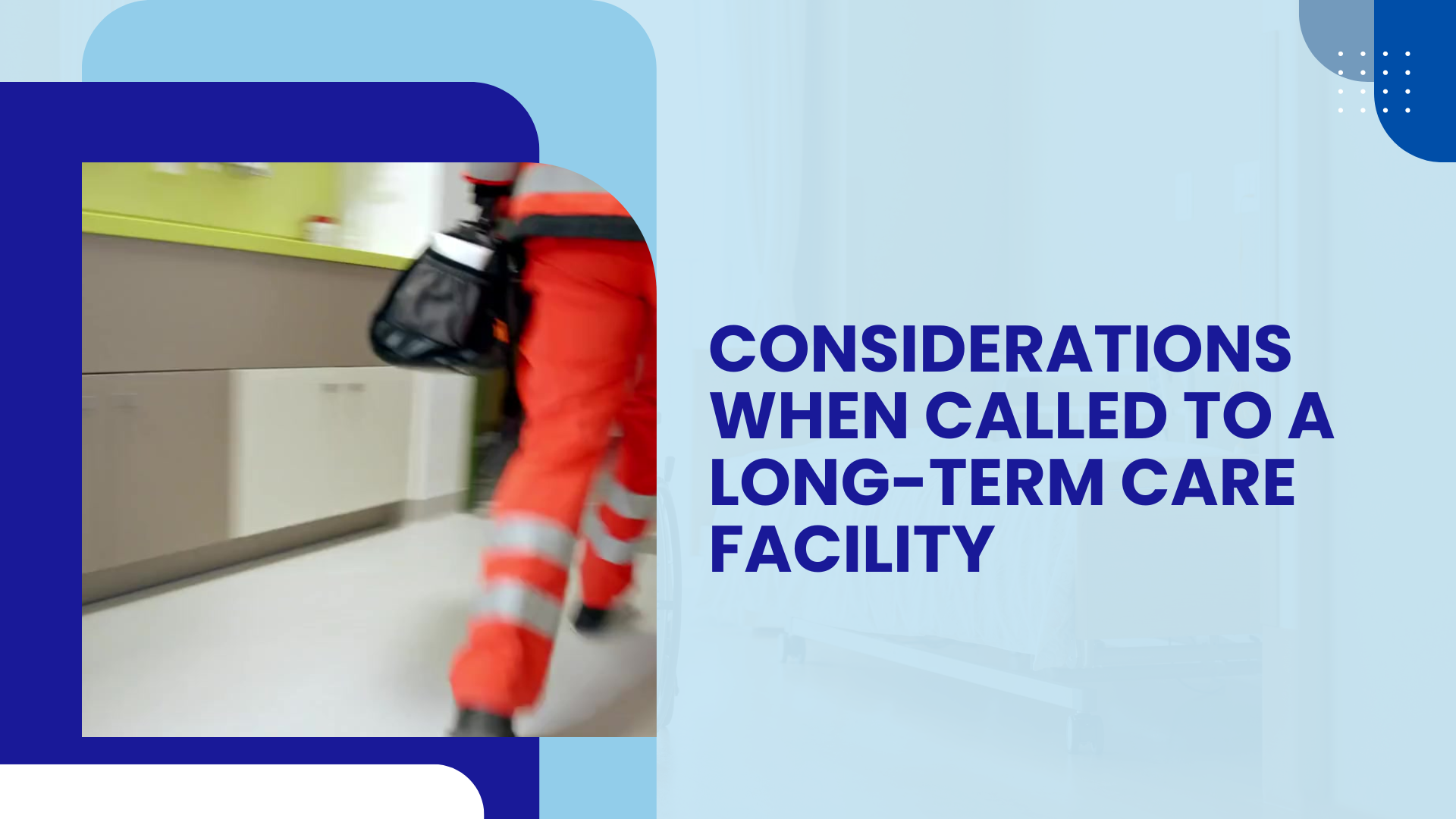
Across the country, local law enforcement and emergency services are often called to nursing homes for help. Emergency Medical Services (EMS), Fire Fighters (FF), and Law Enforcement (LE) are often confronted with situations in nursing homes for which they have not been prepared. Other times, they may see conditions in a long-term care facility they find concerning. The result can lead to a tenuous response, sometimes with uncertainty as to what they should do.
The Department of Justice (DoJ) has contracted with the National Consumer Voice for Quality Long-Term Care (Consumer Voice) to develop short, engaging educational videos and materials informing and educating first responders about considerations when called to a long-term care facility; the role of the Long-Term Care Ombudsman Program (LTCOP); addressing and reporting suspected abuse, neglect, or exploitation; resident capacity and decision making; effective communication; and the importance of documentation.
This training toolkit is intended to be a quick self-study overview and includes 8 module videos, each with an accompanying fact sheet.